How to Bond Two Rabbits: A Step-by-Step Guide
Introducing rabbits takes neutering, neutral territory, and patience. The process step by step, how to read chasing versus fighting, and why stress bonding is out.
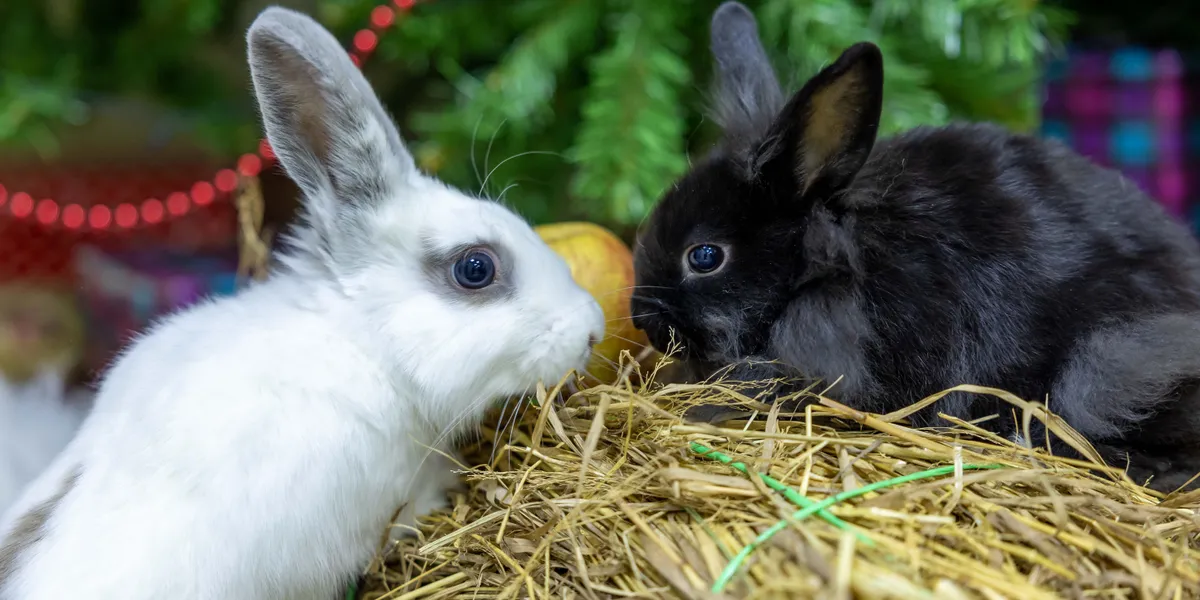
Rabbits are social animals, and many are noticeably happier in a bonded pair — grooming each other, lying pressed together, and coping far better with stress. Most owners in one large survey disagreed that rabbits are happy living alone.
But you cannot simply put two rabbits in a room and hope they hit it off. Rabbits are territorial, and they are startlingly vicious fighters for animals that look like living slippers. A botched introduction causes genuine injuries and can poison the relationship permanently.
This is the process, done properly. It’s a different thing entirely from bonding with your rabbit yourself, which is about human trust.
Before you start
Both rabbits must be neutered
Non-negotiable. Intact rabbits will usually fight, and hormonal aggression overrides any technique.
Wait after surgery. Hormones take time to clear — allow at least four to six weeks after neutering before beginning introductions. Males can remain fertile for up to six weeks after the procedure and may still behave hormonally in that window. Both rabbits also need to be fully healed.
Test for E. cuniculi
This step is routinely skipped and shouldn’t be. Encephalitozoon cuniculi is a parasite carried by a significant proportion of pet rabbits, often without symptoms, and it can be transmitted between them.
The RWAF recommends testing both rabbits beforehand — or, if you’d rather not test, assuming both are positive and treating for 28 days before mixing them. Talk to your vet before you start introductions, not after.
Have the setup ready
- Two separate enclosures for the pre-bonding phase
- A neutral space neither rabbit has ever occupied
- At least two of everything for the shared enclosure later — food stations, water bowls, litter boxes, and hides
- Thick gloves and a towel or dustpan to separate safely if needed
Which pairings work best
A neutered male and a spayed female is the classic combination and usually the easiest, particularly for first-time owners.
Two babies under 12 weeks of the same sex can often live together immediately, as can occasional “love at first sight” pairs who take to each other instantly.
Every other combination needs the gradual process — including same-sex adult pairs, which can work but tend to be harder.
Adopting an already-bonded pair from a rescue skips all of this entirely, and it’s worth considering if you haven’t got a rabbit yet.
Step 1: Living side by side
Set the two enclosures near each other so the rabbits can see and smell each other through wire without physical contact.
Then start mixing scents:
- Swap litter trays between them
- Swap the enclosures themselves every few days, so each spends time in the other’s space
- Rub a cloth over one rabbit, then the other
Give this several days to a couple of weeks. You’re aiming for calm curiosity rather than frantic interest or obvious hostility.
Step 2: First meetings in neutral territory
Neutral territory means somewhere neither rabbit has ever been. Not the living room where one free-roams, not near either enclosure. A bathroom, a spare room, or a hallway that’s been thoroughly cleaned works well.
Set it up deliberately:
- No furniture to hide under or behind — you need to be able to reach them, and rabbits shouldn’t be able to corner each other
- Non-slip flooring — a towel or mat, since rabbits scrabbling on slick floors panic
- Distractions — scatter food, put down piles of hay, add a couple of cardboard boxes with two exits each
- You, on the floor, within arm’s reach for the whole session
Keep the first session very short — a few minutes is plenty. End it while things are still calm, rather than waiting for it to go wrong.
Step 3: Building up
Repeat daily, gradually lengthening sessions as they stay relaxed. Progress looks like:
- A few minutes → 15 minutes → half an hour → longer
- Ignoring each other → sitting near each other → lying side by side
- Eventually mutual grooming, which is the milestone you’re waiting for
Once they’re consistently relaxed together for long stretches, move to a larger neutral space, then eventually to the shared enclosure — thoroughly cleaned first so it doesn’t smell like either of them.
Don’t leave them together unsupervised until they’ve had many calm hours together, including mutual grooming and sleeping side by side.
Reading the behaviour
This is the part owners find hardest. Some rough handling is normal and necessary — they’re establishing a hierarchy — but real fighting must be stopped instantly.
| Normal, keep watching | Stop the session |
|---|---|
| Light chasing | Sustained, frantic chasing |
| Mounting, then acceptance | Mounting the head end, or persistent refusal to allow it |
| Nipping | Biting that draws fur or blood |
| Ignoring each other | Circling each other fast, tails up |
| Grooming one another | Fur flying |
| Lying nearby, then together | Boxing on hind legs |
| One grooming and the other accepting | Either rabbit cornering the other |
Mounting is normal. It’s dominance, not sexual behaviour, in neutered rabbits. Watch that it doesn’t move toward the head end, where a rabbit can be seriously injured.
Separate at the slightest sign of real tension. The RWAF’s guidance is explicit that rabbits can inflict serious injuries on each other very quickly.
Never separate a fight with bare hands. Use gloves, a towel, a dustpan, or a piece of cardboard between them. Rabbits bite hard in a fight and won’t distinguish you from each other.
How long it takes
Anything from a couple of hours to a couple of months. There’s no reliable way to predict which pair you have.
Signs it’s working: mutual grooming, sleeping touching, eating side by side from the same dish, and generally seeking each other out rather than tolerating proximity.
Don’t rush the final step. Most bonding failures come from giving unsupervised access too early.
On stress bonding
You’ll encounter advice suggesting you deliberately frighten two rabbits into cooperating — car rides, confined carriers, a laundry basket, the top of a running washing machine. The theory is that shared fear makes them lean on each other.
The Rabbit Welfare Association & Fund explicitly does not support any stress bonding methods, rejecting confined spaces and unnecessary car journeys as pairing techniques.
The reasoning is straightforward. You’d be deliberately inflicting significant stress on prey animals — the same category of stress that contributes to gut stasis — in the hope of a behavioural shortcut. Any bond formed under duress also hasn’t been tested under normal conditions.
Neutral territory, short sessions, and patience take longer and don’t carry that cost.
After they’re bonded
- Keep at least two of everything — food stations, water bowls, litter boxes, hides. Resource competition restarts arguments.
- Give hides two exits, so one rabbit can’t block the other inside.
- Never separate them. Take both to the vet even when only one is ill; a rabbit that comes home smelling of a clinic can be rejected by its partner.
- Watch for a re-bond after any separation. Illness, surgery, or a hospital stay can disrupt a bond, sometimes needing a short reintroduction.
- Expect a hierarchy. One rabbit will be dominant. Occasional mounting and grooming demands are normal, not a failing bond.
When bonding fails
Some pairs don’t work, and forcing it isn’t kind to either animal.
After a genuine fight, do not simply try again. The RWAF advises against reintroduction after a proper fight and recommends seeking expert help. Rescues that run bonding services do this constantly and can often succeed where a home attempt failed.
If a particular pair truly won’t bond, consider:
- A bonding service through a rabbit rescue
- A different partner — personality mismatch is real
- Side-by-side living, where rabbits keep separate enclosures with contact through a barrier. Not as good as a full bond, but far better than isolation.
Frequently asked questions
Do rabbits have to be neutered to bond? Yes. Intact rabbits will usually fight, and hormonal behaviour defeats the process. Allow four to six weeks after surgery before starting.
What is the best pair of rabbits to bond? A neutered male with a spayed female is generally easiest. Same-sex adult pairs can work but are typically harder.
Can I bond a rabbit with a guinea pig? No. It used to be common and is now advised against — different dietary needs, different communication, and a real risk of the rabbit injuring the guinea pig.
How do I know if they’re fighting or just playing? Light chasing, nipping, and mounting are normal. Fur flying, biting, boxing, circling with tails up, or either rabbit cornering the other means separate immediately.
Can I speed bonding up? Not safely. The methods that promise to are stress-based ones welfare organisations advise against.
Do bonded rabbits need to go to the vet together? Yes, take both. It reduces stress for the patient and prevents the returning rabbit smelling unfamiliar.
My bonded rabbits suddenly started fighting. Why? Common triggers include illness or pain in one of them, a change in territory, one returning from a vet visit, or an incomplete original bond. Have the pair checked by a vet — pain frequently underlies sudden aggression.
Neuter both, test for E. cuniculi, build up slowly on genuinely neutral ground, and always stop while it’s still going well. It takes longer than the shortcuts — and it’s the version that ends with two rabbits who actually like each other, grooming each other’s ears on your living room floor.
Source: How to Bond Rabbits Together, Rabbit Welfare Association & Fund.
← All posts