Rabbit Breeds: A Complete Guide for Pet Owners
Compare rabbit breeds by size, coat, and temperament — from the 2 lb Netherland Dwarf to the 20 lb Flemish Giant — and find the right fit for your home.
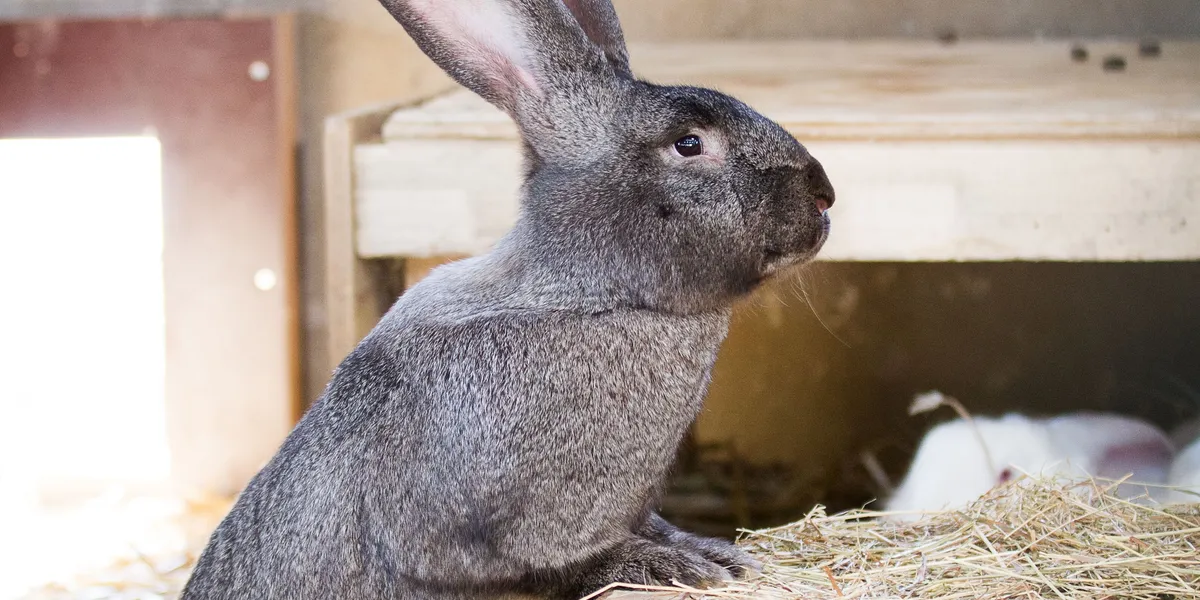
The American Rabbit Breeders Association recognises more than 50 breeds, ranging from under 2 pounds to over 20 — a spread roughly equivalent to the gap between a chihuahua and a labrador.
Here’s the short version, though: breed tells you how big your rabbit will get, how much grooming it needs, and roughly how long it will live. It does not reliably tell you what your rabbit will be like.
That last part catches people out, usually after they’ve picked a breed described as “docile” and brought home a small tyrant. The genuinely useful questions are how much space you can give, how much grooming you’re willing to do, and whether you’re ready for the health issues certain body shapes bring with them.
Does rabbit breed actually matter?
Yes, but not in the way most people expect.
Breed is a reliable predictor of physical traits. A Flemish Giant will need far more space, food, and litter than a Netherland Dwarf, and an Angora will need hours of grooming a Mini Rex never will. Those differences are real and worth planning around.
Breed is a much weaker predictor of personality. Individual variation within a breed is larger than the average difference between breeds. Far more influential than breed are:
- Spay/neuter status. Hormonal rabbits are more territorial, more likely to spray, and harder to litter train.
- Early handling. A rabbit socialized gently from a young age is usually more confident.
- Environment. A rabbit with space, a companion, and a predictable routine behaves very differently from one confined to a small cage.
So treat breed temperament descriptions — including the ones below — as loose tendencies, not promises.
How big do rabbits get?
This is the single most useful thing breed tells you. Here are typical adult weights for common pet breeds:
| Breed | Typical adult weight | Notes |
|---|---|---|
| Netherland Dwarf | 1.1–2.5 lb | One of the smallest breeds |
| Britannia Petite | Up to 2.5 lb | Very small, high-energy |
| Jersey Wooly | 2.5–3.5 lb | Wool coat, easy-care for a wool breed |
| Lionhead | 2.5–3.75 lb | Mane needs regular attention |
| Holland Lop | Up to 4 lb | Smallest lop breed; very popular |
| Mini Rex | 3–4.5 lb | Plush, velvet-textured coat |
| Dutch | 3.5–5.5 lb | Classic banded markings |
| Mini Lop | 4.5–6.5 lb | Noticeably bigger than a Holland Lop |
| English Angora | 4.4–7.7 lb | Very high grooming demand |
| French Angora | 7.7–9.9 lb | Dense undercoat, slightly easier |
| English Lop | ~12 lb | Ears up to 31 in tip to tip |
| French Lop | ~12–15 lb | Large, heavy-boned |
| Checkered Giant | ~12–15 lb | Active, needs lots of room |
| Flemish Giant | 15–25 lb | Often called the “gentle giant” |
A word on “dwarf”: it describes the rabbit’s size, not the size of its requirements. Small rabbits are not low-maintenance rabbits. They still need a large enclosure and daily exercise, and several of the smallest breeds have the biggest personalities. See our guide to choosing a rabbit enclosure for what that actually looks like.
Small rabbit breeds
Netherland Dwarf (1.1–2.5 lb) is among the smallest breeds and one of the most recognizable, with a compact body and short ears. They have a reputation for being more skittish and highly strung than larger breeds. Modern selective breeding has softened this considerably, but they can still be a poor match for households wanting a rabbit that tolerates handling.
Polish and Britannia Petite are similarly tiny. The Britannia Petite in particular is energetic and often described as spirited rather than placid.
Jersey Wooly (about 3 lb) is a wool breed whose coat is unusually manageable for its type, which is a large part of its popularity. Temperament reports are consistently friendly.
Lionhead (2.5–3.75 lb), recognized by ARBA in 2013, has a distinctive wool mane around the head. The mane mats and needs regular attention, and rabbits sometimes chew each other’s manes.
Medium rabbit breeds
This is the sweet spot for most first-time owners — big enough to be sturdy, small enough to house reasonably.
Dutch (3.5–5.5 lb) is one of the oldest and most popular pet breeds, known for a calm, easy-going disposition and for taking well to training.
Mini Rex (3–4.5 lb) has the standout coat in the rabbit world. Rex fur has shortened guard hairs so the coat stands upright rather than lying flat, producing a dense, plush, springy texture unlike any other breed.
Mini Lop (4.5–6.5 lb) is meaningfully larger than a Holland Lop despite the similar name — worth knowing before you buy, since the two are easily confused.
Standard Rex offers the same remarkable coat as the Mini Rex in a larger body.
Large and giant rabbit breeds
Flemish Giant rabbits typically reach at least 15 pounds and regularly hit 20–25. They’re often called gentle giants, and the breed is genuinely known for a docile temperament, though like any rabbit they need consistent handling to stay comfortable with people.
Giants come with real trade-offs:
- Space. A giant breed needs an enclosure closer to a dog pen than a rabbit cage.
- Cost. They eat proportionally more hay, pellets, and greens, and use far more litter.
- Lifespan. Larger breeds generally live shorter lives — often around 5–7 years, against 8–12 for small and medium breeds. Bigger bodies put more strain on the heart and joints. Our post on rabbit lifespan covers this in more detail.
- Handling. A 20 lb rabbit that panics is genuinely difficult to hold safely.
French Lop and Checkered Giant sit just below the Flemish Giant in size. The Checkered Giant is notably active and does poorly with limited space.
Lop-eared rabbit breeds: what to know first
Lops — Holland, Mini, French, English — are enormously popular, and the ears are the reason. They’re also the one breed group where a health caveat genuinely belongs up front.
A 2019 study in Veterinary Record compared lop-eared and erect-eared rabbits in a rescue population and found the lop-eared rabbits had significantly more ear canal narrowing, more earwax and inflammation, and more frequent pain responses during ear examination. They also showed significantly more incisor problems, molar overgrowth, molar sharpness, and molar spurs, plus more history of veterinary dental treatment.
It was a small study — 30 rabbits — so treat the size of the effect with some caution. But the direction of the finding is consistent with what the ear and skull shape would predict, and it’s worth knowing.
This does not mean you shouldn’t get a lop. It means that if you do:
- Budget for more frequent dental checks with a rabbit-savvy vet.
- Keep hay intake high, since chewing hay is what wears molars down. See what your rabbit should eat.
- Learn the early warning signs of dental pain, especially loud tooth grinding, drooling, dropping food, and a change in eating habits.
The English Lop deserves a special mention: its ears reach up to 31 inches tip to tip, the longest of any breed. Those ears drag, and the rabbit can step on them or catch them on things, so the enclosure needs to be set up with that in mind.
Long-haired and wool breeds
Wool breeds are beautiful and are the biggest grooming commitment in the rabbit world.
English Angora (4.4–7.7 lb) needs grooming roughly twice a week, and more if the coat texture runs cottony. French Angora (7.7–9.9 lb) has a dense undercoat that needs somewhat less frequent work.
The specific risk with wool breeds is wool block — rabbits groom themselves, swallow wool, and cannot vomit it back up, so it can accumulate and cause a blockage. Clipping or plucking an Angora’s wool every 90–120 days is standard practice to prevent it, and untreated wool block can be fatal.
If you like the look but not the workload, a Jersey Wooly or Lionhead gives you wool character at a fraction of the maintenance.
Mixed-breed and shelter rabbits
Most rabbits in shelters are mixed breed, and they make excellent pets. A few advantages worth weighing:
- They’re often already spayed or neutered, which saves you a significant expense and skips the hormonal-behavior stage entirely.
- Many are already litter trained.
- Adult rabbits have settled personalities, so what you meet is close to what you get — a real advantage over guessing how a baby will turn out.
- Shelter staff can usually tell you whether a rabbit is confident, shy, or good with other rabbits.
Rabbits are among the most commonly surrendered pets, frequently by people who bought one on impulse without knowing the commitment involved. If you haven’t yet, read things to know before getting a rabbit.
Which rabbit breed is best for a first-time owner?
If we had to pick: a medium-sized, short-haired, erect-eared rabbit is the game on easy mode. Dutch and Mini Rex both qualify, as do most shelter mixes of that general build. You get a sturdy body, minimal grooming, and none of the extra dental and ear risk that comes with lop conformation.
That said, the breed matters less than the setup. A well-housed, spayed, hay-fed lop with a good vet will do better than a “beginner” breed in a small cage on a poor diet.
Frequently asked questions
What is the friendliest rabbit breed? There’s no clear winner, because temperament varies more within breeds than between them. Dutch, Mini Rex, and Jersey Wooly all have good reputations, but a spayed or neutered rabbit with proper space and gentle handling will be friendlier than any breed pick alone can guarantee.
Which rabbit breed lives the longest? Small and medium breeds generally outlive giants, often reaching 8–12 years against roughly 5–7 for the largest breeds.
Are lop-eared rabbits harder to care for? Somewhat. They’re prone to more ear and dental problems than erect-eared rabbits, which means more vet monitoring — not that they’re bad pets.
Do rabbits need to be the same breed to bond? No. Bonding depends on personality, spay/neuter status, and a careful introduction process, not breed. Size difference is worth considering for safety, but mixed-breed pairs bond routinely.
How do I know what breed my rabbit is? If it came from a shelter, often you don’t — and it doesn’t matter much. Judge by what you can observe: adult size, coat type, and ear carriage will tell you what care your rabbit actually needs.
Whichever breed you land on, the fundamentals don’t budge: unlimited hay, plenty of space, a rabbit-savvy vet, and a spay or neuter. Get those right and the breed becomes a detail. Start with what you need for a pet rabbit.
Source on lop-eared health risks: Johnson JC, Burn CC. Lop-eared rabbits have more aural and dental problems than erect-eared rabbits: a rescue population study. Veterinary Record, 2019.
← All posts