Why Is My Rabbit Grinding Its Teeth? Purring vs Pain
Rabbits make two very different tooth sounds. One means contentment, the other means pain — here is how to tell them apart and what to do about each.
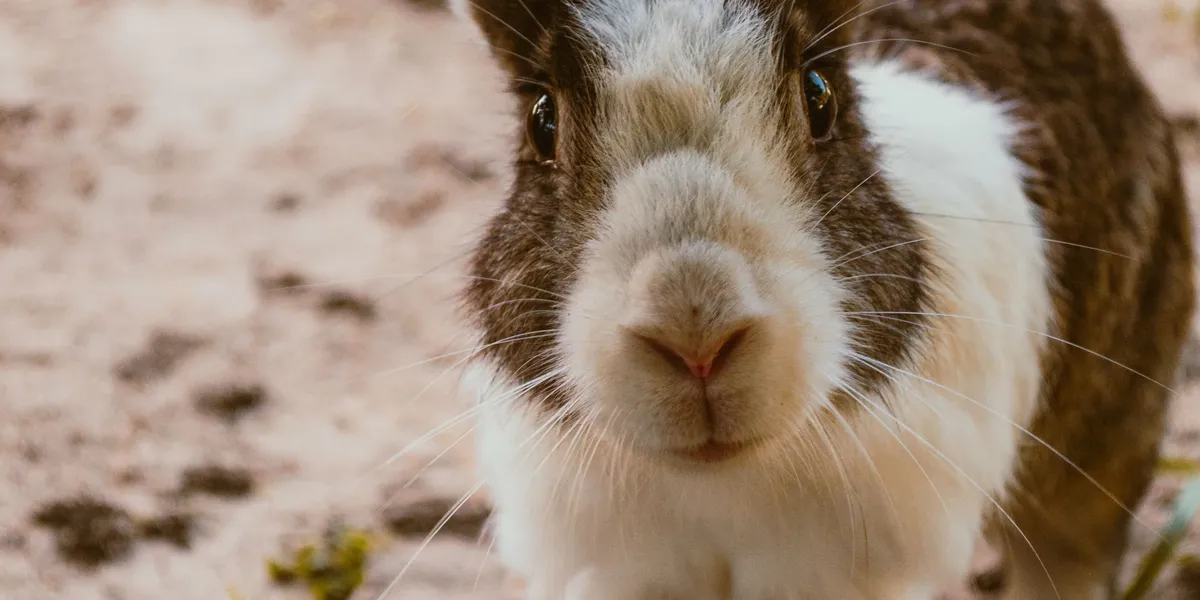
Rabbits make two completely different noises with their teeth, and learning to tell them apart is one of the genuinely useful skills of rabbit ownership. One means your rabbit is blissed out. The other means call the vet.
- Soft, light, rapid chattering while relaxed is tooth purring. It’s contentment. It’s good.
- Loud, slow, deliberate crunching you can hear across the room is tooth grinding. It’s a pain signal, and it means call a vet.
If you’re reading this because your rabbit is making the loud kind and is also sitting hunched and not eating, stop here and call a rabbit-savvy vet today.
Tooth purring: the good sound
Tooth purring is a soft vibration, often so quiet you feel it through your hand rather than hear it. Rabbits do it while being stroked — especially around the forehead and cheeks — or while settled and comfortable. It’s the rabbit equivalent of a cat’s purr, and it’s lovely.
It usually comes with other relaxed signals:
- Eyes half-closed or fully closed
- Body settled, sometimes with a full flop onto the side
- Head pushed into your hand asking for more
- Ears loose and relaxed rather than rigid
This is the rabbit equivalent of a cat’s purr, and it’s a good indication your rabbit is comfortable with you.
Tooth grinding: the sound that means pain
Pain grinding — bruxism — is unmistakably different once you’ve heard both. It’s louder, slower, and more deliberate. People often describe it as crunching or crackling rather than chattering, and you can typically hear it from across a room.
Critically, it almost never appears alone. Look for what accompanies it:
- Hunched posture, often with the belly pressed to the floor
- Sitting very still, reluctant to move
- Not eating, or refusing favorite foods
- Reduced or absent droppings
- Ears pinned back against the body
- Squinting, or a tight, tense face
- Drooling or a wet chin
- Withdrawal — hiding, or not greeting you as usual
A rabbit displaying loud grinding plus any of these needs to be seen the same day.
Telling them apart
| Tooth purring | Tooth grinding | |
|---|---|---|
| Volume | Soft, often barely audible | Loud, audible across the room |
| Rhythm | Fast, light chattering | Slow, deliberate crunching |
| When | Being petted, resting | Any time, often while still and hunched |
| Posture | Relaxed, flopped, eyes soft | Hunched, tense, pressed down |
| Eating | Normal | Usually reduced or stopped |
| What to do | Nothing — enjoy it | Call a vet today |
How to read a rabbit’s face for pain
Here’s something most owners have never been told: there’s a validated scientific tool for assessing rabbit pain from facial expression, and you can learn the basics of it.
The Rabbit Grimace Scale, developed by Keating and colleagues in 2012, scores five facial features that change measurably when a rabbit is in pain. It’s used in veterinary and research settings, and analgesics have been shown to reduce the scores — meaning it genuinely tracks pain rather than just stress.
The five features, and what happens when a rabbit hurts:
- Orbital tightening — the eyes narrow or close, rather than being open and soft.
- Cheek flattening — the cheeks lose their normal rounded fullness and appear compressed.
- Nostril shape — the nostrils draw into a more vertical, “V” shape.
- Whisker position — whiskers stiffen, losing their normal loose flexibility.
- Ear shape and position — the ears rotate backward, toward the hindquarters.
Two important caveats from the people who developed it: assess only an awake rabbit, and watch for a while rather than judging a single moment, since brief expressions come and go for all sorts of reasons.
This matters enormously for a prey animal that instinctively conceals weakness. A rabbit won’t limp theatrically or cry out. It will go quiet, hold still, and change its face — and an owner who knows what to look for catches problems days earlier.
What pain grinding usually means
Dental disease. The most common single cause, covered in detail below.
GI stasis or gas. The gut slows or stops, gas builds, and it’s genuinely painful. Grinding plus not eating plus no droppings is the classic combination — see why is my rabbit not eating.
Urinary problems. Bladder sludge, stones, or infection. Watch for straining, blood in the urine, or a wet rear.
Arthritis, particularly in rabbits over five, often showing as reluctance to jump or move.
Post-surgical pain, including after a spay or neuter. Speak to your vet — rabbits often need more pain relief than owners expect.
Injury, especially after a fall or a struggle during handling. Rabbits can fracture their own spine kicking out — see do rabbits like to be held.
Dental disease: the most common culprit
Rabbit teeth are open-rooted and grow continuously for the animal’s entire life — on the order of 2 to 3 millimetres per week. They aren’t maintained by wear as a bonus; wear is the only thing preventing constant overgrowth.
When the teeth don’t meet and grind properly, they develop spurs — sharp points that grow sideways into the tongue or cheek. That’s a rabbit chewing with a blade pressed into soft tissue, which is exactly as painful as it sounds.
Why it happens:
- Not enough hay. This is the big one. Hay contains long fibre that forces the side-to-side grinding motion that wears molars down, plus silica that assists the wear. Pellets are crushed quickly and don’t produce the same action, so a pellet-heavy, hay-light diet lets teeth outgrow their wear. See what should my rabbit eat.
- Skull shape. Breeds selected for short, round faces — Netherland Dwarfs, Holland Lops, Mini Lops — have shortened jaws that crowd the teeth, so they can’t shear properly. That raises the risk of early molar spurs and incisor malocclusion. A 2019 study also found lop-eared rabbits had significantly more incisor problems, molar overgrowth, and molar spurs than erect-eared rabbits. See rabbit breeds.
- Trauma, abnormal eruption, and root or jawbone changes with age.
It’s common. Acquired dental disease was found in 25.4% of 1,420 owned rabbits in one private practice study, mostly affecting the cheek teeth — and the VetCompass data from English practices recorded overgrown molars in 7.6% of rabbits.
Signs beyond grinding:
- Dropping food while eating, or chewing on one side
- Preferring soft foods and abandoning hay
- Drooling, or a permanently wet chin and dewlap
- Runny eyes — upper tooth roots can overgrow and block tear ducts
- A bumpy or lumpy jawline, which can indicate root overgrowth or infection
- Weight loss
- Reduced grooming, because grooming hurts
What the vet will do
Examination. Proper molar assessment requires an otoscope or specialized scope — you cannot see the back teeth by looking in the mouth, and neither can a vet without instruments. This is one reason a rabbit-savvy practice matters.
Treatment. Overgrown teeth and spurs are filed down with an electric burr, usually under anaesthesia. Teeth should never be clipped — clipping can split the tooth and lead to infection. If a vet proposes clipping, ask about burring instead.
Pain relief. Ask about it explicitly. Rabbits are routinely under-medicated for pain because they show it so subtly, and a rabbit in pain eats less, which starts the gut problems.
Ongoing management. Rabbits with dental disease often need burring on a recurring schedule. Congenital malocclusion tends to be managed rather than cured.
What to do right now
- Listen carefully. Soft and light while relaxed is purring. Loud and slow is grinding.
- Check the rest of the picture — appetite, droppings, posture, and the facial signs above.
- Loud grinding with any other symptom: call your vet today. Combined with not eating, treat it as an emergency.
- Don’t give human painkillers. Many are toxic to rabbits.
- Offer favourite greens and fresh hay to see whether your rabbit will eat, and tell your vet what happened.
- Note when it started and what else changed — genuinely useful for diagnosis.
Prevention
- Unlimited grass hay, always. The single most effective dental measure there is.
- Limit pellets to a measured portion so they don’t crowd out hay.
- Annual vet exams, twice yearly for seniors, with molar checks — see how often should rabbits see a vet.
- Know your rabbit’s normal — normal eating speed, normal dropping size, normal face.
- Consider skull shape when choosing a rabbit, if dental risk is a concern for you.
Frequently asked questions
Is tooth grinding always bad? No — the soft, light version is contentment. It’s the loud, slow, deliberate version that signals pain. Volume and rhythm are your best cues.
My rabbit grinds its teeth while being petted. Should I worry? Almost certainly not. Soft chattering during petting, with a relaxed body and half-closed eyes, is tooth purring.
Can I trim my rabbit’s teeth at home? No. Rabbit teeth require a veterinary burr, usually under anaesthesia. Clipping risks splitting the tooth and causing infection.
How much does rabbit dental treatment cost? It varies widely by region and severity, but it’s a common reason to keep an emergency fund. Recurring burring is cheaper managed early than after abscesses develop.
My rabbit ground its teeth once and seems fine now. Do I still call? If it was brief and isolated and your rabbit is eating normally, monitor closely. If it recurs, or appears with any change in appetite, droppings, or posture, call.
Learn the difference between the two sounds, and learn your rabbit’s face. For an animal built from the ground up to conceal discomfort, those two things are very nearly the whole of your early warning system.
Sources: Keating SCJ et al., Rabbit Grimace Scale, via NC3Rs grimace scales; Rabbit Dental Problems, Rabbit Welfare Association & Fund.
← All posts