Do Rabbits Like to Be Held? What the Research Says
Most rabbits dislike being picked up, and around 60% struggle when lifted. Why that is, how to hold one safely when you must, and better alternatives.
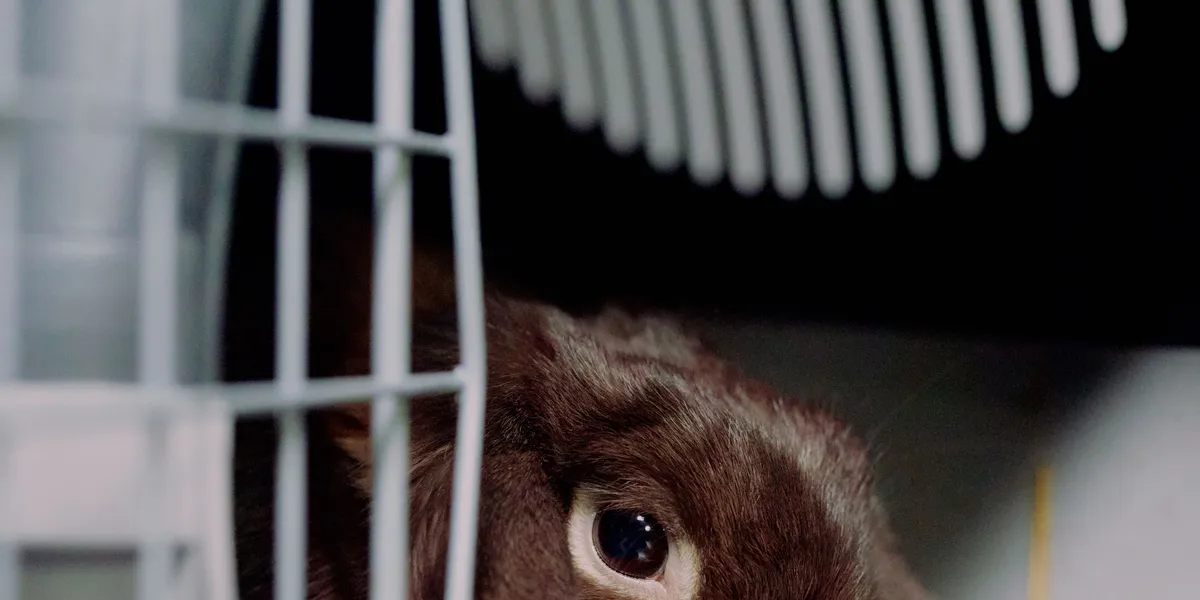
Let’s get the disappointing bit out of the way first: most rabbits do not like being picked up. Not yours specifically. Most of them. It’s not you.
Owner surveys suggest around 60% of pet rabbits struggle when lifted, and fear-related aggression around handling is common. A 2016 literature review in the Journal of Small Animal Practice found the evidence fairly consistent: being lifted and held is unpleasant for most rabbits.
This is far and away the most common disappointment among new rabbit owners — you brought home a soft, cuddly-looking animal and it turns out to have strong opinions about being cuddled. But it’s worth reframing rather than fighting. Your rabbit isn’t badly trained and hasn’t taken against you. It’s behaving exactly as its body and instincts require.
Why being picked up is so unpleasant for rabbits
They’re prey animals. In a rabbit’s evolutionary experience, being lifted off the ground means one thing: something has caught you. There’s no version of that which is neutral.
Their skeleton is unusually fragile. This is the part most owners have never been told, and it’s the reason the safety advice is so emphatic.
A rabbit’s skeleton makes up only about 7–8% of its body weight, compared with roughly 12–15% in a cat or dog. Bone density is low and the cortical walls are thin. Meanwhile, rabbits carry extremely powerful hind limb muscles built for explosive acceleration.
That combination — a light, thin-walled skeleton driven by disproportionately strong leg muscles — means a rabbit can generate enough force with its own back legs to fracture its own lumbar spine. A rabbit that panics and kicks out while being held, unsupported, is at genuine risk of catastrophic injury from its own musculature.
So the urge to kick and the fragility that makes kicking catastrophic are the same adaptation — a body built to outrun anything with teeth, at the cost of being able to survive its own panic. It’s a brilliant design with one very specific bug, and you are holding it.
“Does that mean my rabbit doesn’t like me?”
No — and this is the separation worth making early, because a lot of people get it wrong and feel quietly rejected for months.
Rabbits form strong attachments to their people. They just conduct the relationship at floor level: sitting near you, flopping over beside you, nudging your hand, rubbing their chin on your shoe, tearing around the room when you walk in. Being carried simply isn’t in the vocabulary.
Judging a rabbit’s affection by whether it tolerates being held is a bit like judging a cat’s by whether it fetches. See are rabbits affectionate for what the real signals look like.
When you genuinely have to pick one up
Not lifting your rabbit isn’t always an option:
- Vet visits and getting into a carrier
- Nail trims every 4–8 weeks
- Health checks, especially checking the rear end for soiling in warm weather
- Grooming during heavy molts
- Emergencies, or removing a rabbit from danger
So the goal isn’t never lifting. It’s lifting rarely, correctly, and with enough preparation that it isn’t traumatic.
How to hold a rabbit safely
The literature is honest that there’s no method rabbits actively enjoy — the recommended techniques are described as the least-worst options. Two work well:
Method 1 — chest and hindquarters. One hand supports the chest and front legs; the other supports the hindquarters and back legs from underneath. The rabbit’s whole body is carried, with the back end never dangling.
Method 2 — against your chest. Hold the rabbit’s back end supported with its feet resting against your chest, so it feels braced against a surface rather than suspended in air.
Whichever you use:
- Stay low. Sit or kneel. If the rabbit does escape, the fall is a few inches rather than a few feet.
- Hold the rabbit close to your body. Contact and support reduce panic; held out at arm’s length is where struggling starts.
- Support the hindquarters at all times. This is the non-negotiable one — an unsupported back end is how spinal injuries happen.
- Keep it brief. Do what you need to and put them down.
- Put them down before they struggle, not after. If you can feel tension building, lower them immediately. This teaches your rabbit that being held always ends calmly.
What never to do
- Never lift by the ears. Ears are not handles. This is painful and can cause serious damage.
- Never scruff. Rabbit skin isn’t adapted to bear an adult rabbit’s weight, unlike a cat’s, and scruffing alone can injure them. If a vet or groomer scruffs your rabbit, ask about alternatives.
- Never carry a struggling rabbit while standing. Get to the floor immediately and let go safely.
- Never “trance” a rabbit — holding it on its back until it goes limp. This isn’t relaxation. It’s tonic immobility, a fear response, with measurably raised heart rate and cortisol. See how to bond with your rabbit.
- Never let a child carry a rabbit around, however gentle they are.
Better alternatives to lifting
Here’s the part that gets overlooked: the veterinary literature explicitly recommends teaching owners ways to avoid needing to carry their rabbits at all.
Move the rabbit in the carrier, not in your arms. Research found that picking rabbits up with the transport box was less aversive than scruffing and carrying them on the arm. In practice: put the carrier on the floor, let the rabbit walk in for a treat, close it, and lift the carrier. The rabbit is transported without ever being held.
Train the carrier as a normal object. Leave it out permanently with hay and treats inside so it’s furniture rather than an omen. This one habit removes most of the stress from vet visits.
Do health checks at floor level. You can check eyes, nose, breathing, coat, and the rear end with the rabbit on the ground. Many owners learn to trim nails with the rabbit sitting on the floor or on a lap at ground level.
Use ramps rather than lifting. For getting into a pen, onto a sofa, or up a level, a ramp lets the rabbit move itself.
Let them come to you. A rabbit that climbs onto your lap by choice is having a completely different experience from one that was placed there.
Teaching a rabbit to tolerate handling
Since some handling is unavoidable, desensitisation is worth the effort. Go slowly — weeks, not days:
- Start with touch on the floor. Stroking, then resting a hand on the chest and hindquarters without lifting.
- Brief lift, immediate return. Lift a couple of inches, put straight back down, reward. Repeat until it’s boring.
- Extend gradually. A second or two longer at a time, always ending before the rabbit tenses.
- Add the destination. Lift into the carrier, or onto a lap, then release.
- Reward every time, with a herb sprig — see healthy rabbit treats.
The principle: end each session while your rabbit is still calm. A rabbit put down because it struggled has just learned that struggling works.
Rabbits handled gently and frequently when very young are generally more tolerant as adults, so a rabbit that missed early socialisation may always find it harder. That’s not a failure — it just sets the pace.
Rabbits and children
This is where the mismatch causes most problems. Children want to pick up and carry a soft animal; that’s precisely what rabbits tolerate least, and a struggling rabbit can both injure itself and scratch or bite in self-defence.
What works:
- Floor-level interaction only. No lifting or carrying by children, as a firm household rule.
- Sit on the floor and let the rabbit approach.
- Petting the forehead and cheeks, which most rabbits enjoy.
- Hand-feeding herbs — a genuinely rewarding interaction for both.
- Adult-only handling for carrier, nail trims, and vet trips.
Framed well, kids often enjoy this more: a rabbit that chooses to hop over and sit with them is a better experience than one that endures being held.
Signs you’re stressing your rabbit
Stop and put them down if you see:
- Struggling, kicking, or twisting
- Ears pinned flat back
- Wide eyes with visible whites
- Rapid breathing
- Grunting, or attempting to bite
- Going rigid or completely limp — limpness is not relaxation
- Thumping once released, or bolting for a hide
Afterwards, a rabbit that hides, refuses food, or avoids you for a while is telling you the experience was too much. See why does my rabbit hide.
Frequently asked questions
Do any rabbits like being held? A minority genuinely tolerate or even seem to enjoy it, usually rabbits handled gently from a very young age. It’s the exception, and it can’t be trained into most adults.
Why does my rabbit run away when I try to pick it up? Normal prey behaviour. Being lifted mimics capture. Reducing how often you lift, and desensitising gradually, works far better than persisting.
Is it safe to hold a rabbit like a baby, on its back? No. That position induces tonic immobility — a fear state, not relaxation — and leaves the spine unsupported.
My rabbit goes completely still when I hold it. Is that good? Usually the opposite. Freezing is a fear response in prey animals. Look at ears, eyes, and breathing rather than stillness.
Can I train my rabbit to like being picked up? You can often train tolerance, which is a realistic goal. Genuine enjoyment is uncommon. Aim for calm and brief.
How do I get my rabbit into a carrier without a fight? Leave the carrier out permanently with treats inside, and let them walk in on their own. Lifting the carrier is easier on the rabbit than lifting the rabbit.
Lift rarely, support the back end, stay low, and let the carrier do the transporting instead of your arms. Then spend the rest of your time on the floor, which is where rabbits conduct their relationships anyway. You’ll get more affection down there than you ever would holding them.
Sources: Bradbury AG, Dickens GJE, Appropriate handling of pet rabbits: a literature review, Journal of Small Animal Practice, 2016; Getting to grips with correct rabbit handling, Veterinary Times.
← All posts